The same tool, very different expectations
A virtual tour always answers the same question — "what does this place really look like?" — but the stake changes completely from one sector to another. For a hotelier it secures a booking; in a museum it extends mediation; for a local authority it makes a public facility understandable to everyone.
That is why we do not produce the same tour for everyone: the route, the points of interest and the embedded content are designed around the decision the visitor has to make.
What changes, field by field
A few examples among the sectors we work with:
- Hospitality & accommodation: fewer cancellations, more direct bookings, a promise that matches the stay.
- Restaurants & venues: atmosphere, room layout and terrace visible before booking.
- Retail & showrooms: layout and products explored before travelling to the store.
- Real estate: better-targeted physical viewings, properties filtered upstream.
- Culture, heritage and tourism: extended mediation and remote access to difficult spaces.
- Schools & training: the campus discovered before open days.
- Business & industry: employer brand, sales presentations and tender responses.
- Local authorities: a public facility clearly presented to residents.
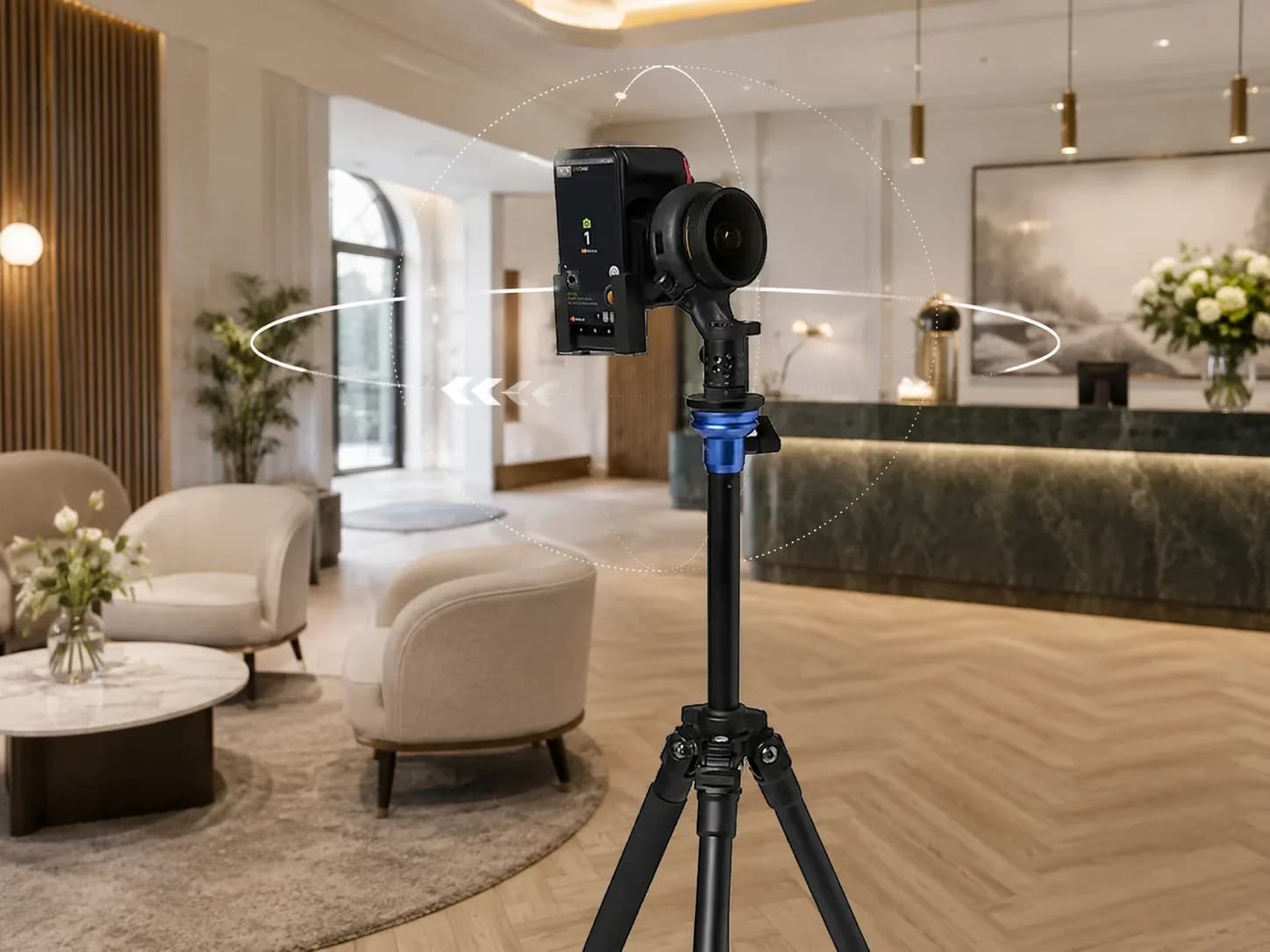
One thing in common: transparency
Across every sector the mechanism is the same. Showing a place as it is reduces uncertainty, and one less uncertainty means a decision moves forward: booking, travelling, applying, visiting or getting in touch.
Conversely, a place that cannot be seen leaves the visitor comparing on price alone.
Choosing the right format per sector
A local shop does not have the same needs as a reception estate or a multi-building industrial site. Depending on the case we recommend a simple tour published as Web 360, an enriched Web 360+ experience, the addition of drone views, or a combination with HDR photography for printed materials.
Going further
April 14, 2026
Related articles

How to prepare your venue for a successful 360° virtual tour shoot
Tidying, lighting, staging: the practical guide to making sure your 360° virtual tour truly showcases your venue.

A national network of photographers for consistent quality across France
Multi-site project? A network of trained photographers guarantees the same immersive result from one city to the next, with no logistics on you.

360° photo, virtual tour, 360° video: differences and how to choose
Three immersive formats often confused: understand their uses and strengths, and pick the one that truly serves your goal.